A tree came down last month—maybe you had it removed, maybe a storm took it down and G&R Tree Service cleared the rest—and now there’s a stump sitting in the middle of your yard. It’s not going anywhere on its own, and every time you mow around it or trip over a root while carrying groceries in from the driveway, it’s a reminder that the job isn’t quite finished.
The good news: a stump usually isn’t an emergency. It won’t fall on anything and it won’t spread to other trees. What it will do, over months and years, is sit there rotting and quietly getting harder to deal with the longer it’s ignored.
It’s not just an eyesore, either. A decaying stump close to the house is exactly the kind of habitat that draws in pests—university extension guidance on carpenter ants lists removing stumps and dead trees as a standard prevention step, right alongside keeping firewood off the ground and away from the house. The closer the stump sits to your home, the more that matters.
Some homeowners try to speed things along themselves—burning the stump out, pouring on chemical stump removers, or just letting it break down over a few seasons. All of those approaches eventually work, but “eventually” can mean a year or more, and burning or treating a stump near a fence, deck, or property line adds its own risks. Stump grinding gets you the same result in a couple of hours.
How Stump Grinding Works (and What to Expect)
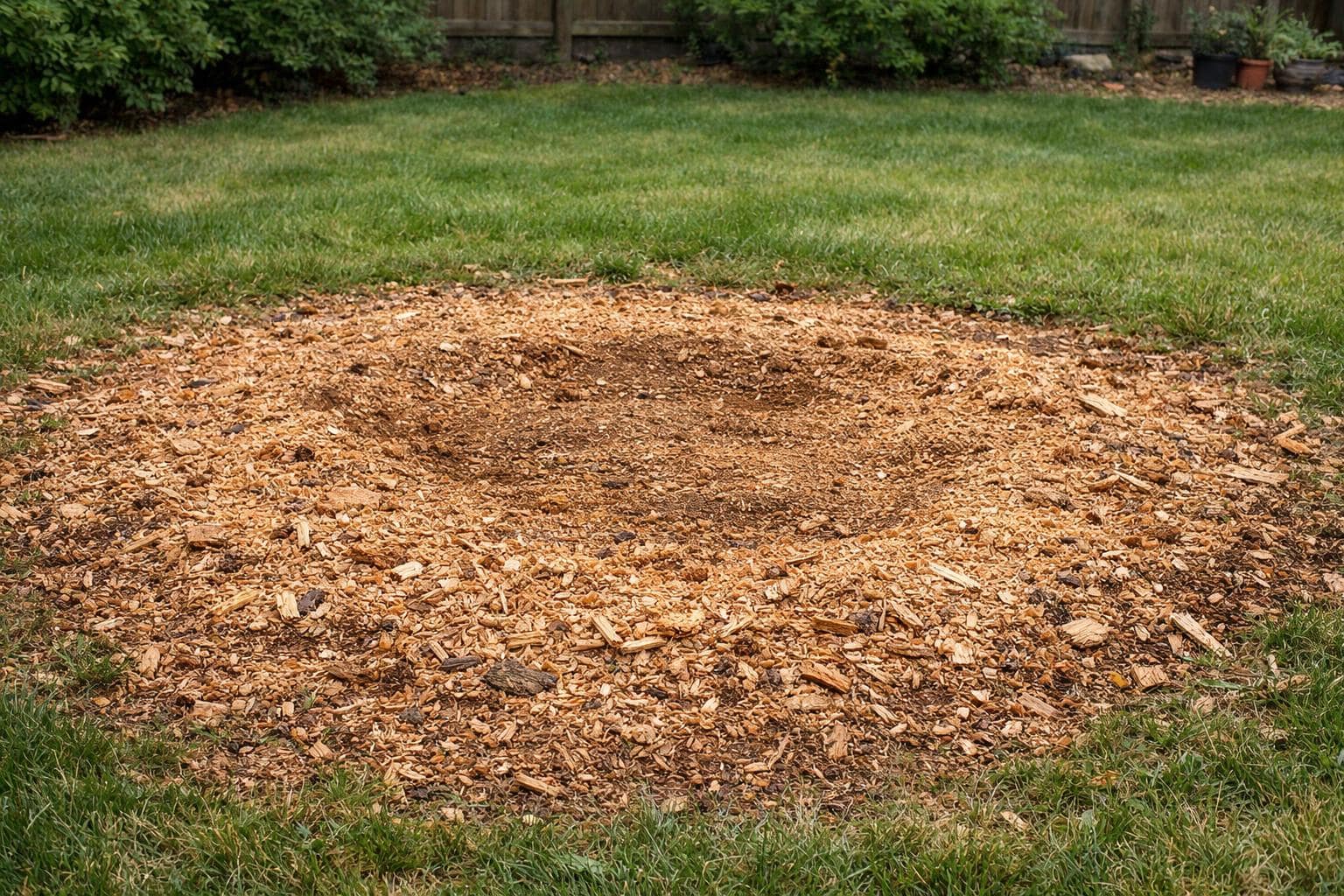
Stump grinding uses a machine with a spinning, carbide-tipped wheel that chews the stump down into wood chips, typically 4 to 6 inches below the soil surface—deeper if you’re planning to replant in that spot. What’s left is a flat, fillable area instead of a raised block of wood in your lawn.
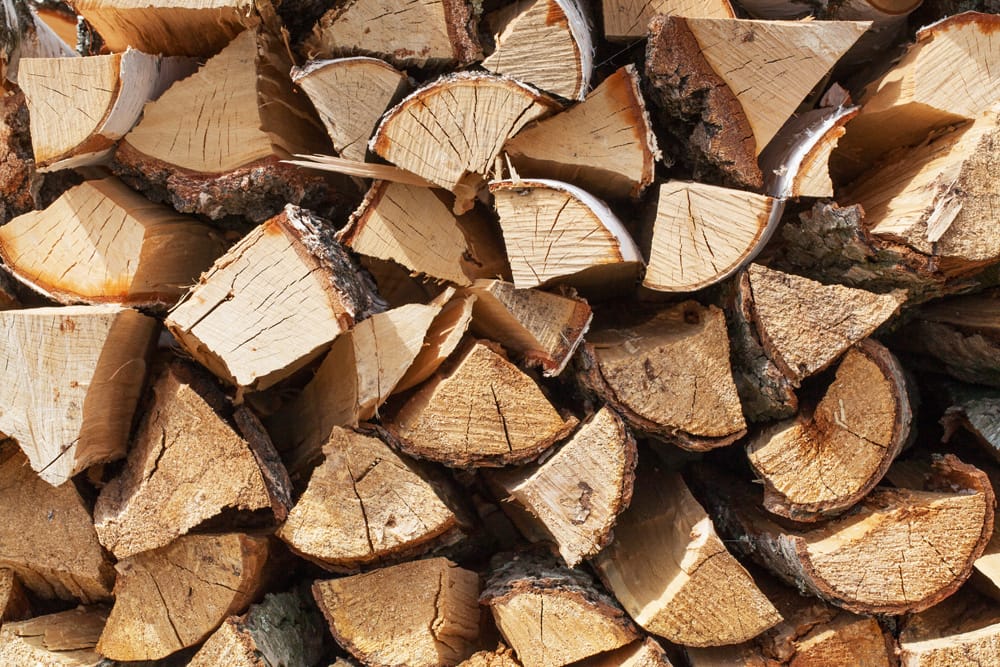
The wood chips that come off aren’t waste. Some homeowners use them right there as mulch, some have them hauled away, and some just want the hole filled in and seeded. We also deliver fresh wood chips separately, if you’d rather have a clean batch for garden beds than what comes off your own stump.
Grinding vs. complete removal. Grinding handles the visible problem—the part above and just below the surface. It’s what most homeowners actually want, and it’s far less disruptive than digging a stump out entirely, which means tearing up a much bigger section of lawn to reach the roots. Complete removal, pulling the whole root ball, really only makes sense when roots are already damaging a foundation, a sidewalk, or underground pipes, or when you’re clearing a spot for major construction. If that’s your situation, we also handle root-specific work—just tell us what’s going on and we’ll figure out the right approach.
What happens to the roots. After grinding, the roots left in the ground break down naturally over the next several years. They won’t send up new shoots the way a stump that’s only been cut—not ground—sometimes will, so you don’t have to worry about the tree trying to grow back from underground.
What affects the job. A few things change the scope: the stump’s size (a 12-inch stump is a much shorter job than a 36-inch oak), how many stumps you’re dealing with at once, how wide the root flare spreads, and whether equipment can actually get close without tearing up the rest of the yard. We give free estimates before any of that becomes a surprise.
FAQ: Stump Grinding in Staten Island
Is stump grinding the same as stump removal?
Not exactly. Grinding chews the stump down below the surface and leaves the roots to decay naturally. Full removal digs out the entire root ball. Most residential situations only need grinding.
How much does stump grinding cost?
It depends on the stump’s size, how many you’re grinding, and how easy the area is to access. We don’t quote prices without seeing the job—a free estimate is the fastest way to get a real number.
How long does stump grinding actually take?
A single residential stump is usually a job measured in hours, not days. Multiple stumps or difficult access can add time.
Will the stump grow back?
No. Once it’s ground down, it won’t resprout. The remaining roots decay in place over the following years.
Can I plant something in that spot right away?
You can plant grass or shallow-rooted plants fairly soon after grinding. If you’re planning a new tree in the exact same spot, talk to us first—leftover roots and wood chips can affect how well a new tree establishes.
Do I need a permit to grind a stump on my own property?
Grinding an existing stump is different from removing a living tree, and it generally isn’t subject to the same permit rules that apply to tree removal in Staten Island. If you’re unsure about your specific property, a quick call to your local building department can confirm it before work starts.
Can I grind a stump myself?
Rental grinders exist, but they’re heavy, dangerous around buried utility lines, and easy to misjudge if you haven’t used one before. Most homeowners find it isn’t worth the injury risk or rental cost for a one-time job.
What do I do with the wood chips afterward?
Your call—use them as mulch, have us haul them away, or have us fill and level the hole. We can also deliver fresh wood chips separately if you’d rather have a cleaner batch for landscaping.
Call to Action
If you’ve got a stump sitting in your yard from a tree we removed—or one that’s just been there a while—G&R Tree Service handles stump grinding all across Staten Island. Glen Gabel is on site for every job, we’ve been doing this for 15+ years, and we’re fully insured. Estimates are always free, and we usually get to it within a few days of the call.
Call or text for a free estimate: 718-815-7897 | Text: 646-302-5184