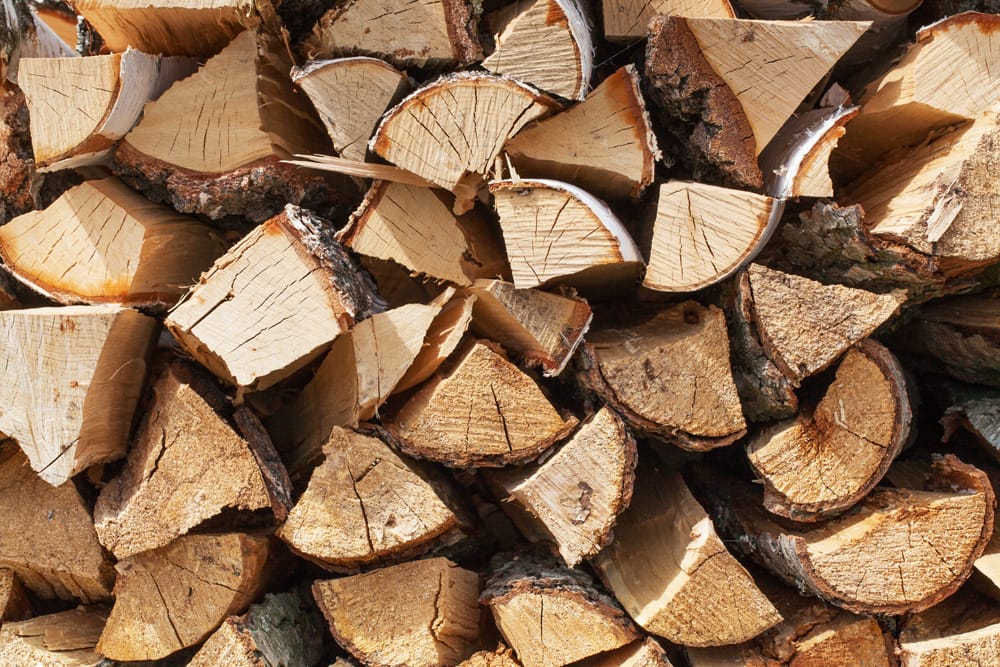

Keep your winter firewood outdoors on a stable, raised base, protect the top from precipitation, and leave the sides open for airflow. Choose a location that balances separation from your home with a practical carrying route. A covered rack or ventilated woodshed can work well; the better choice depends on your yard and how you reach the wood.
When you order seasoned firewood Staten Island homeowners can use through winter, plan the storage space before the wood arrives. We offer seasoned firewood cut to 12 to 14 inches in full and half cords. Once you have your supply, good storage helps protect it from unnecessary wetting.
Choose a stable location with good drainage
Look for firm, reasonably level ground where water does not collect. Avoid depressions, downspout discharge areas, and spots where runoff crosses the yard. Picture the location during rain, not just on a dry November afternoon. You want a place you can reach without stepping through puddles or carrying logs across an awkward slope.
Keep the main supply separate from the house rather than stacking it against siding. Cornell Cooperative Extension recommends about 30 feet of separation and explains that rodents and insects can shelter around firewood. Treat that as storage guidance, not a statement of a Staten Island setback law. On a tight lot, ask your local fire department about an appropriate arrangement.
Before settling on a spot, walk the carrying route. Leave doors, gates, steps, and walking paths usable. Allow enough room to stand in front of the stack and remove pieces without twisting around a fence or garden furniture. Convenience matters, but it should not mean storing the entire supply beside the back door.
Raise the wood above soil and standing water
Use a sound firewood rack or a stable raised platform so the bottom pieces do not rest directly on soil. The EPA’s wood-storage guidance recommends keeping wood outdoors, off the ground, with only the top covered. Elevation is part of the arrangement, not a substitute for choosing a drained location.
Check the base before loading it. A rack with one foot sinking into soft ground can become uneven as weight increases. Follow the rack manufacturer’s capacity and assembly instructions, and make sure its supports suit the short pieces you plan to store. Do not assume a rack’s overall length tells you whether it supports 12 to 14 inch logs properly.
Stack securely while leaving room for air
Build an orderly stack instead of leaving a loose heap. Fit pieces so they rest securely without packing every opening shut. Keep the ends supported, and avoid a tall, narrow pile that becomes difficult to reach or unstable as you remove wood. Cornell’s storage guidance recommends loose stacking no more than two rows deep, with supported ends.
With multiple rows, preserve access rather than filling every available inch. Leave room to inspect the base and retrieve wood without pulling pieces from beneath a heavy overhang. If a section starts leaning, stop taking logs from it and correct the arrangement before continuing.
The Minnesota Department of Agriculture recommends good air circulation around stored firewood. For your winter setup, that means keeping openings clear rather than crowding the rack with bags, yard equipment, or tightly wrapped covers.
Cover the top without wrapping the pile
Rain protection and ventilation need to work together. A roof or secured top cover should shed water away from the wood while leaving the sides exposed. The EPA’s firewood storage instructions call for a gap between the cover and the stack, with open sides for circulation. Do not turn the pile into a sealed plastic package.
If you use a tarp, arrange it as a top cover rather than draping it to the ground on every side. Secure it so you can uncover a section without disturbing the stack. After windy or wet weather, check whether it has shifted or formed a pocket that holds water. Keep the retrieval side straightforward to open and close.
Open rack or ventilated woodshed?
An open rack suits a flexible layout
A rack can be the simpler choice when you want a defined storage footprint and easy access from the front. Open sides leave the stack exposed to moving air, but the wood still needs overhead protection. Compare the usable storage dimensions with your planned supply, including room around the rack, rather than measuring only the frame.
A ventilated woodshed provides a permanent roof
A woodshed combines overhead weather protection with a dedicated storage area. Choose a design with open or well-ventilated sides and a raised base, not a closed box for damp logs. The EPA’s woodshed example keeps wood beneath a roof with sides open for ventilation. A roof offers consistent top protection, although exposed openings still need consideration when choosing the shed’s position.
For either option, compare four things: protection from rain, airflow, total space occupied, and access when the yard is wet or snowy. A larger structure is not automatically better if reaching its back row requires moving half the supply.
Bring indoors only what you will use soon
Leave the main supply outdoors and bring in a manageable amount for immediate use. Avoid treating a basement, garage, or living room as long-term overflow storage. The Minnesota Department of Agriculture advises against storing firewood indoors for extended periods because insects can travel in the wood.
Keep that small indoor supply clear of heating equipment. The U.S. Fire Administration recommends at least 3 feet between combustible items and heat sources, including fireplaces and wood stoves. Do not place damp logs beside an appliance to speed drying.
Prepare your space before ordering
Before ordering, choose your location, check the base, arrange overhead protection, and leave a clear carrying route. Visit our Staten Island seasoned firewood page for our full and half cord options. Call us at 718-815-7897 to place your order for seasoned 12 to 14 inch firewood.